
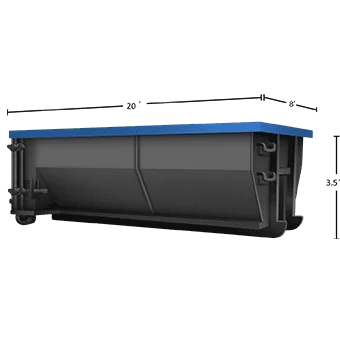
A removable container with provider-handled transport
A roll-off is a separate debris container placed and recovered by a suitable truck. It remains at an agreed position while the accepted load is accumulated, then the provider returns to remove it. This format can suit a project with a defined loading area and period, provided the actual box, materials and handling route are assessed together. It is different from assuming a truck and loading crew will wait onsite to clear the job.
Give the expected materials and use period when requesting the container. Confirm the proposed loading arrangement and its space needs, weight and fill conditions, and how the loaded box will be recovered. An exchange is a separately coordinated return visit with an empty container, not something to infer from remaining rental time. Keep the truck’s operating route available as the project fills with supplies; ask the provider to arrange movement rather than repositioning the box yourself.
Describe what goes into the load
A roll-off container needs a workable loading plan and an equally workable collection plan. Describe the debris and site together so the proposed equipment can be assessed before delivery.
Identify the material streams, bulky items and any dense debris. Volume alone does not establish the appropriate container or weight allowance. Ask the provider what is accepted and what must remain separate.
Do not put unknown liquids, chemicals or potentially hazardous material in the container without an approved disposal arrangement. If the project exposes an unexpected material, stop adding it to the agreed load until its handling is resolved.
Reserve the operating space, not just the rectangle
Explain the approach, turning conditions, overhead obstacles and surface. The vehicle must be able to place and recover the container; the occupied footprint does not describe that operation. Ask how the load and site affect the provider’s assessment.
Keep people outside the truck work area and coordinate with other deliveries. Where a public right-of-way is involved, resolve the applicable permission before scheduling. San Francisco Public Works includes short-duration debris boxes within its temporary-occupancy guidance; the responsible party must confirm the correct process for the job.
Plan exchanges before the container becomes an obstacle
Agree how an exchange is requested and how the load is kept within the stated limits. Do not overfill or assume added time includes unlimited swaps. If the work uses several material streams, ask whether separate containers or different handling arrangements are appropriate.
Keep exits, pedestrian routes and the sanitation service approach clear. A storage area that grows around the container can prevent collection. Assign someone who can maintain access when the main work crew changes.
Review the end-of-hire conditions
Check the rental period, transport, disposal or weight provisions, accepted materials, loading limits and pickup process in the quote. Explain the uncertainty in the project programme and ask how changes are handled.
Before collection, confirm that the load remains within the agreement and the vehicle can approach. Report a changed material, obstruction or damaged access surface rather than leaving the issue for the arriving driver.
Questions before you book
Can I use a parking lane for the container?
First establish the applicable public-space permission and conditions, then confirm practical access with the provider. An empty parking lane is not authority to occupy it.
Is the container’s footprint enough to plan the space?
No. The provider must also assess the truck’s placement and collection operation, including overhead and approach conditions.