
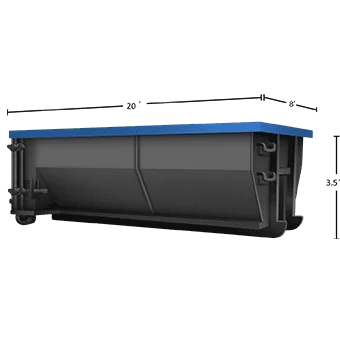
A debris container for your cleanout or project
A rented dumpster gives an agreed collection point for accepted discarded material while a cleanout, renovation or other job is underway. The container arrangement concerns delivery, the loading period and removal of the accepted load; it does not by itself include workers to clear rooms, demolish material or carry items into the box. Identify any separate labour requirement before comparing proposals.
Describe both the space the material may occupy and its likely weight. Bulky light items can fill a container differently from dense debris, so a visual volume estimate is not a weight allowance. Ask which container and disposal terms fit the actual materials, then confirm fill limits, rental dates, pickup and any exchange or extension. Specify a roll-off format when that is the offered handling arrangement you need.
Describe the materials before choosing a container
A dumpster needs to fit the way the job will be loaded as well as the amount of material. Explain what will go into it, how the team intends to load it and where the container can stand. That information helps the provider review a practical option.
List the types of debris or discarded items and any material whose acceptance is uncertain. Ask the provider about prohibited items, separation, weight and fill limits for the proposed container. Do not assume all project waste can be mixed together.
Explain whether the task is a building cleanout, renovation or another activity, and estimate the expected volume as clearly as possible. Dense material and bulky light items can create different practical constraints. Let the provider review the container and disposal arrangement for the actual load.
Review how the load reaches the container
Ask about the offered container’s loading method and any door or opening. If the team expects to walk materials through a door, show the space needed to use it and keep the loading route clear. Do not assume a container placed tightly against another object will remain usable for the planned task.
For example, a position may leave room for the container itself while a parked vehicle prevents a loading door from opening. Review that everyday arrangement before delivery. Follow the provider’s loading instructions and do not improvise ramps, climb into equipment or alter the container.
Keep placement and truck work in the same plan
Obtain permission for the proposed location, including any public-space occupation that applies. Describe the surface and explain overhead, entry or surrounding restrictions to the provider. Ask it to assess delivery, any exchange and final collection.
The operating space can be larger than the container’s resting footprint. Keep it available as materials accumulate and other suppliers arrive. If toilets are on the same project, coordinate the routes so container handling does not block their user approach or routine care.
Agree the hire and collection terms
Give the exact San Francisco address, dates, material list and intended loading method for the quote. Review transport, permitted fill, weight and disposal terms, extensions and the process for requesting an exchange. Ask what happens if access is blocked or the load is outside the agreed scope.
Before final collection, stop adding material beyond the confirmed limits and ensure the receiving route is available. Keep the responsible site contact informed so the container can leave while the agreed access still exists.
Questions before you book
Why does the loading method matter?
A door, access route or other loading arrangement may need space beyond the container body. Explain how the team intends to load it so the proposed model and position can be reviewed.
Can everything from a renovation go in one dumpster?
Give the provider the material list and ask about acceptance, separation and limits. Do not mix uncertain or prohibited items into the load.